
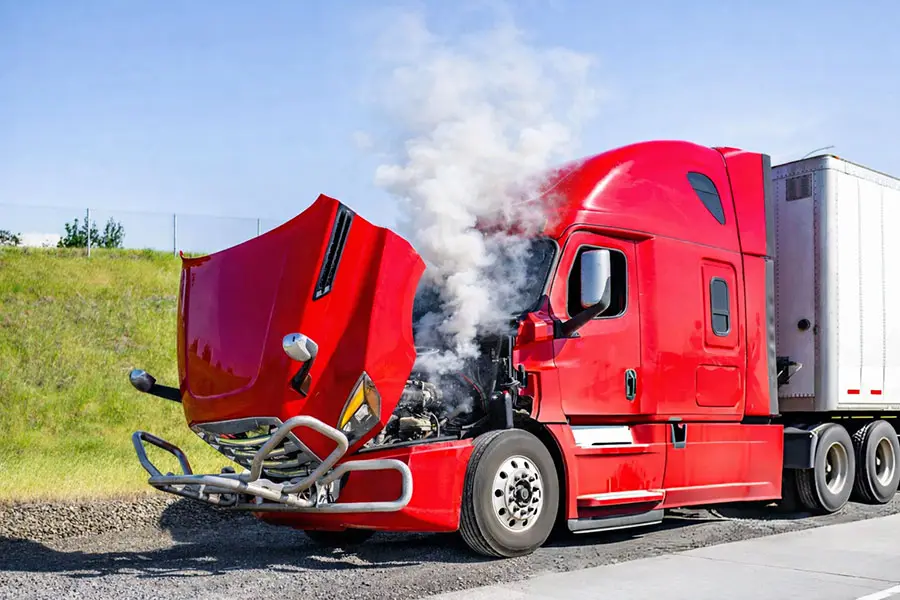
If you drive or manage heavy-duty trucks in Columbus, you already know how quickly a normal day can turn into a costly breakdown. One of the most stressful situations? Watching your temperature gauge climb into the red.
At Fleetbarn, we work with heavy-duty trucks across Columbus every day, and overheating is one of the most common—and preventable—issues we diagnose. Left unchecked, it can lead to serious engine damage, expensive repairs, and unexpected downtime.
The good news is that most overheating problems follow predictable patterns. If you know what to look for and act quickly, you can often prevent major failures.
Columbus creates the perfect conditions for overheating—especially for heavy-duty trucks. Between hot, humid summers, constant stop-and-go traffic, and long idle times at job sites, your cooling system is always under pressure.
At Fleetbarn, we regularly see trucks overheat during slow traffic or while hauling heavy loads through construction zones. These conditions reduce airflow and force your engine to work harder, pushing the cooling system to its limits.
Low coolant is one of the most frequent reasons trucks overheat. Even a small leak can slowly drop coolant levels until the system can’t regulate temperature anymore.
If you’re topping off coolant more often than usual, that’s usually a sign there’s a deeper issue that needs attention.
In Columbus, construction dust, dirt, and road debris can quickly clog a radiator and restrict airflow.
Fleetbarn technicians often find radiators heavily clogged with debris, especially on trucks running through construction-heavy routes.
A stuck thermostat can prevent coolant from circulating through the engine. When that happens, temperatures rise quickly—sometimes within minutes of starting the truck.
The water pump keeps coolant moving through the engine. When it begins to fail, you might notice whining noises, leaks, or inconsistent temperature spikes.
If the pump fails completely, overheating is almost unavoidable.
Your cooling fan plays a critical role when you’re stuck in traffic or idling. If the fan clutch isn’t working properly, airflow drops and engine heat builds rapidly.
Hauling heavy loads while dealing with traffic puts constant stress on your engine. Combined with limited airflow, your cooling system has to work much harder than usual.
Over time, rust, scale, and sludge can build up inside the system, reducing efficiency and restricting coolant flow.
At Fleetbarn, we often see overheating caused by a combination of buildup and lack of routine maintenance rather than a single failure.
If your temperature gauge starts rising, quick action can make the difference between a minor repair and a major engine failure.
These steps can help in the moment, but they don’t fix the underlying problem. A proper inspection is still necessary.
When a truck comes into Fleetbarn with overheating issues, we don’t just top off coolant and send it back out. We run a full cooling system inspection to identify the real cause.
Our diagnostic process typically includes:
In many cases, overheating is caused by multiple smaller issues working together—not just one obvious failure.
Routine cooling system inspections are the easiest way to prevent breakdowns. Catching small issues early can save you thousands in truck repairs.
If your routes take you through dusty or construction-heavy areas, regular radiator cleaning is essential.
A rising temperature gauge is often the first warning sign. Acting early can prevent serious damage.
At Fleetbarn, we’ve seen minor coolant leaks turn into major engine failures simply because they were ignored too long.
If your truck overheats repeatedly, loses coolant, or shows sudden temperature spikes, it’s time for a professional inspection.
Delaying repairs can lead to blown head gaskets, warped engine components, or complete engine failure—repairs that can quickly become extremely expensive.
Sudden overheating in heavy-duty trucks is usually caused by low coolant levels, a faulty thermostat, or a blocked radiator. Other factors, like a failing water pump or cooling fan issues, can also trigger rapid temperature spikes.
No. Driving an overheating truck can cause severe engine damage. Always pull over safely, turn off the engine, and follow emergency cooling steps before continuing your trip.
Check coolant levels at least once a week or before long hauls, especially during hot weather or in heavy traffic conditions in Columbus, Ohio. Regular checks help prevent overheating and costly repairs.
Low coolant levels and radiator problems are the most common causes of truck overheating. Other contributing factors include clogged cooling systems, faulty thermostats, and heavy loads in stop-and-go traffic.
Regular cooling system maintenance, including flushing the coolant, inspecting hoses, cleaning radiators, and monitoring engine temperature, helps prevent overheating. Scheduling preventive fleet maintenance with trusted experts like Fleetbarn ensures your trucks stay reliable even in hot and congested driving conditions.
Overheating problems don’t fix themselves. The longer you wait, the more damage they can cause.
At Fleetbarn, our Columbus-based team specializes in diagnosing and repairing heavy-duty truck overheating issues quickly and correctly the first time. Whether it’s a small repair or a more complex engine issue, we’re here to help keep your truck running reliably.
Schedule an inspection and avoid costly downtime.
3781 Sullivant Ave,
Columbus, OH 43228
614.812.BARN (2276)
Email Inquiries
General: info@fleetbarn.com
Service: service@fleetbarn.com
Accounting: acct@fleetbarn.com
We accept Cash, EFS Checks, Comcheks, and all major Credit Cards

© 2025 Copyrights. All Rights Reserved.