
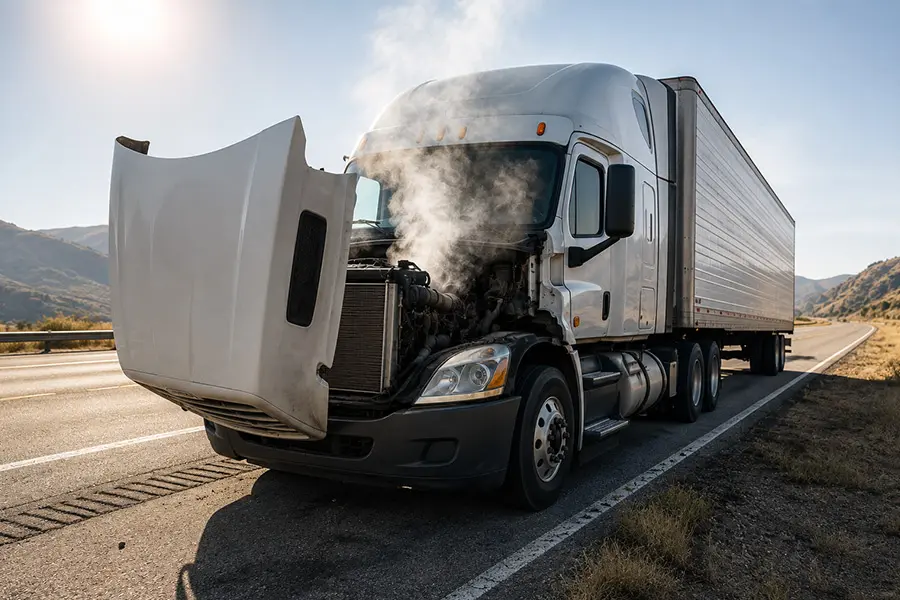
Summer Heat & Semi-Trucks:

Summer Heat & Semi-Trucks: How to Prevent Overheating and Blowouts on Highways

Summer heat can take a serious toll on heavy-duty trucks. High temperatures place additional strain on engines, cooling systems, batteries, tires, and other critical components, increasing the likelihood of breakdowns, costly repairs, and unexpected downtime. What may seem like a minor maintenance issue during cooler months can quickly become a major problem when trucks are operating in extreme heat.

For truck drivers, owner-operators, and fleet managers, seasonal maintenance is essential for keeping vehicles reliable, safe, and productive throughout the summer. Understanding the most common heat-related issues and addressing them before they lead to failures can help reduce downtime, improve performance, and keep operations running smoothly during the hottest months of the year.

Why summer is the most dangerous season for semi trucks?

A lot of drivers and fleet managers focus their maintenance attention on winter — and that makes sense. Ice, snow, and freezing temps are obvious enemies. But summer quietly causes just as much damage. Heat amplifies stress on nearly every major truck system. Your cooling system works overtime, your tires operate closer to their pressure limits, and your engine oil breaks down faster under sustained high temperatures.

In Columbus, Ohio, summer temperatures regularly climb into the 90s, and asphalt surface temperatures can exceed 150°F. When you're running loaded at highway speeds through those conditions, the risk of truck overheating and tire blowouts goes up significantly. Understanding the why behind these failures is the first step toward preventing them.

Understanding truck overheating: Causes and warning signs

Engine overheating is one of the most common — and costly — summer breakdowns for commercial trucks. Catching it early makes all the difference between pulling over for a coolant top-off and facing a blown head gasket or cracked engine block.

Common Causes of Heavy Truck Engine Overheating

  • Low or contaminated coolant: This is the number one culprit. Old coolant loses its ability to transfer heat efficiently, and low levels mean there's simply not enough fluid to do the job.
  • Clogged or damaged radiator: Road debris, bugs, and scale buildup restrict airflow and fluid flow through the radiator, reducing cooling capacity dramatically.
  • Failing water pump: The water pump circulates coolant through the engine. A worn impeller or a failing pump seal means coolant isn't moving fast enough to keep temps in check.
  • Stuck or faulty thermostat: If the thermostat sticks closed, coolant can't flow to the radiator. Temps spike fast.
  • Cooling fan problems: Whether it's a clutch fan that won't engage or a malfunctioning electric fan, reduced airflow through the radiator leads directly to overheating.
  • Coolant leaks: Even a slow leak can drop your coolant level dangerously low on a long summer haul. Check hoses, clamps, and the radiator itself regularly.

Warning signs your truck is about to overheat

  • Temperature gauge climbing into the red or above normal range
  • Steam or smoke coming from under the hood
  • Sweet smell of coolant inside or outside the cab
  • Loss of engine power or rough running
  • Warning lights on the dash — don't ignore them, especially in summer

If you see any of these signs, pull over safely as soon as possible. Running an overheating engine even for a few minutes can cause catastrophic internal damage. No load is worth an engine replacement.

Commercial truck cooling system maintenance: what to check before summer

The best time to deal with cooling system issues is before the heat hits — not when you're broken down on the side of the road. Here's a solid pre-summer inspection checklist for your cooling system.

Cooling System Pre-Summer Inspection Checklist

  • Coolant level and condition: Check the level in the overflow reservoir and inspect the coolant's color and smell. Green or orange coolant that looks rusty or smells burned needs to be flushed and replaced.
  • Coolant concentration: Use a refractometer to check the freeze/boil protection level. Your coolant mix should handle temps well above summer highs.
  • Radiator inspection: Look for bent fins, external leaks, and debris packed into the core. Clean the radiator with compressed air or a gentle water rinse.
  • Hoses and clamps: Squeeze radiator hoses — they should feel firm but pliable, not soft, brittle, or swollen at the ends. Tighten or replace any loose clamps.
  • Belt condition: The serpentine belt drives the water pump and cooling fan. Check for cracking, fraying, or glazing and replace if there's any doubt.
  • Thermostat function: If your truck has a history of running hot, a thermostat replacement is cheap insurance.
  • Pressure test the system: A cooling system pressure test will reveal small leaks that aren't obvious to the eye. Don't skip this one.

Fleet managers running multiple trucks out of Columbus should consider scheduling a dedicated summer cooling system inspection for every unit in the fleet. Catching one failing water pump before it leaves the yard saves a roadside service call, towing fees, and hours of lost revenue.

Tire blowout prevention: Protecting your fleet on hot Ohio highways

Tire blowouts are frightening, dangerous, and surprisingly common in summer — especially on heavily loaded semis running at highway speeds. The combination of heat, weight, and speed creates the perfect conditions for a catastrophic tire failure.

Fleet truck summer tire maintenance tips

  • Check tire pressure every morning before dispatch: Cold inflation pressure is your baseline. Check it before the truck rolls, not after it's been sitting in the sun all day. Use a calibrated gauge, not a visual inspection.
  • Follow manufacturer specs — not the sidewall max: The pressure rating on the tire sidewall is the maximum, not the target. Follow the truck manufacturer's recommended inflation for the load being carried.
  • Inspect tires for damage before every run: Look for cuts, bubbles, exposed belts, uneven wear, and sidewall cracking. In summer, don't skip this step — heat makes existing damage worse fast.
  • Don't bleed pressure from hot tires: If you check pressure mid-route and tires are running high, don't release air. That's normal thermal expansion. Let them cool and recheck. If they're still high when cold, then adjust.
  • Rotate and balance on schedule: Uneven wear is a blowout waiting to happen. Stick to your rotation schedule to maximize tread life and catch wear patterns early.
  • Retire tires at the right time: Age matters as much as tread depth. Tires older than six years should be carefully evaluated, regardless of how they look on the outside.

Fleet maintenance summer checklist: Beyond cooling and tires

A complete summer readiness check goes beyond just coolant and tires. Here are a few other systems that take a hit in the heat and deserve attention before peak summer driving season.

  • Engine oil: Verify you're running the correct viscosity oil for summer temperatures. High heat thins oil faster, reducing its ability to protect engine components.
  • Air conditioning system: A driver who's overheated is a distracted, fatigued driver. Make sure the cab A/C is blowing cold before summer hits. Recharge refrigerant if needed.
  • Brake system: Brakes generate tremendous heat on long downhill runs. Inspect brake linings, drums, and rotors for wear. Check brake adjustment and air system function.
  • Battery: Contrary to popular belief, heat kills batteries faster than cold. Have your batteries load-tested before summer to avoid a no-start on a hot day.
  • Fuel system: Summer blend diesel performs differently than winter blend. Make sure filters are clean and fuel system components are in good shape.

Practical tips for truck drivers running summer routes in Ohio

Even with perfect maintenance, drivers are the last line of defense on the road. Here's what smart, experienced drivers do differently in the summer.

  • Do a full walkaround every single morning — tires, leaks, lights, and more. In summer, this matters even more.
  • Watch your temperature gauge, especially when climbing grades fully loaded.
  • Take breaks during extreme heat. Not just for the truck — for yourself. Heat fatigue is real and dangerous.
  • If your truck starts running hot, don't push through it. Find a safe place to pull over, let it cool, and assess before continuing.
  • Keep your Columbus area repair shop contact handy. Knowing who to call when something goes wrong shortens downtime significantly.

Frequently Asked Questions About Summer Truck Maintenance

How often should I check coolant levels on my semi truck in summer?

Check coolant levels at every pre-trip inspection during summer months — ideally daily. Heat accelerates coolant consumption and can reveal slow leaks that aren't obvious in cooler weather. If you're topping off coolant frequently, that's a red flag that warrants a full cooling system inspection right away.

What tire pressure should I run on my semi truck in hot weather?

Always set tire pressure to your truck manufacturer's recommended cold inflation pressure based on your load — not the tire sidewall maximum. Check pressure in the morning before the truck has been driven. Tires naturally gain 10–15 PSI as they heat up during a run, which is normal and expected. Do not bleed air from hot tires.

What are the first signs of a failing cooling system on a diesel truck?

Early signs include a temperature gauge running slightly higher than normal, needing to add coolant more frequently than usual, a sweet or burned smell from the engine compartment, or visible steam when the truck is stopped. Catching these early signs means a much cheaper and easier fix than a full breakdown on the highway.

How can fleet managers reduce summer breakdown costs for their fleet?

The most cost-effective strategy is a dedicated pre-summer PM inspection for every truck in the fleet. Focus on cooling systems, tires, batteries, and brakes. Catching problems in the shop costs a fraction of what a roadside breakdown, tow, and emergency repair will run — plus you avoid the lost revenue from a truck sitting out of service.

Is it safe to keep driving if my truck temperature gauge is running a little high?

No — and this is a common mistake that leads to expensive damage. If your temperature gauge is climbing above the normal operating range, pull over safely and investigate before continuing. Even mild overheating can accelerate head gasket wear or cause warping of engine components. It's always better to lose 20-30 minutes now than lose an engine later.

Keep your trucks running cool this summer — Fleetbarn Has You Covered

Summer doesn't have to mean breakdowns. With the right maintenance schedule and a trusted repair partner in Columbus, Ohio, you can keep your fleet running safely and profitably through even the hottest months of the year. At Fleetbarn, we specialize in heavy truck and fleet maintenance for drivers and operators throughout the Columbus area. From full cooling system inspections and radiator service to tire checks and complete pre-summer fleet PMs, our experienced technicians know what your trucks need before the heat turns into a problem.

Don't wait for a breakdown to remind you it's summer. Contact Fleetbarn today to schedule your fleet's summer maintenance inspection.

CONTACT US

3781 Sullivant Ave,
Columbus, OH 43228

614.812.BARN (2276)

Email Inquiries
General: info@fleetbarn.com
Service: service@fleetbarn.com
Accounting: acct@fleetbarn.com


We accept Cash, EFS Checks, Comcheks, and all major Credit Cards


© 2025 Copyrights. All Rights Reserved.

Top